
I want to tell you something that the entire self-help industry will hate me for saying.
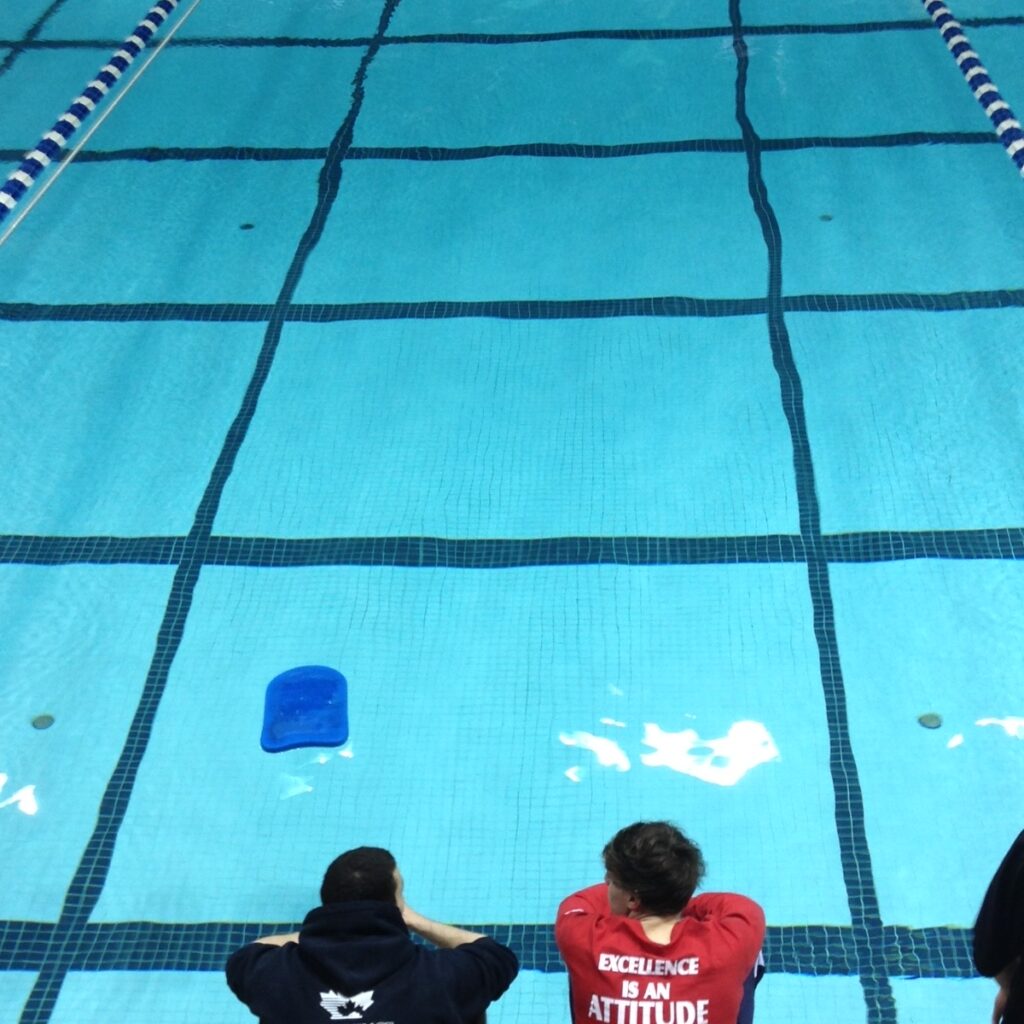
I won over 500 medals in competitive swimming. I broke more than 20 club records. I set a Canadian National Record. I trained under Olympic-level coaching for 8 years — early mornings, late nights, holidays sacrificed, social events missed, tears shed in changing rooms before climbing back on the block and competing anyway.
And the most valuable thing that experience gave me had nothing to do with the hardware.
It had nothing to do with the records, the rankings, or the recognition.
It was this:
Nobody in that pool ever told me I was enough just for showing up.
They timed me. To the millisecond. Either you were faster than everyone else — or you weren’t. No nuance. No participation ribbon. No “but you really gave it your all.” Just a number on a scoreboard and the gap between where you were and where you needed to be.
That brutal, unforgiving, objective measurement system gave me something no motivational speaker, no therapy app, no mindset coach, no online course, no self-help book ever could:
The ability to know exactly where I stood — and to use that information to get better.
What the Pool Taught Me That Business School Never Could
We live in a world that is desperately trying to remove difficulty from human development. Easier workouts. Gentler feedback. Safer spaces. Softer edges. A wellness industry worth trillions that has built its entire business model on making you feel broken enough to buy the fix.
And we are producing the most anxious, least resilient generation of adults in recorded history.
I don’t think that’s a coincidence.
Here’s what 8 years of elite competition — 500+ medals, 20+ broken records, one national record — actually taught me. Not the version that sounds good on a motivational poster. The real version.
Comfort is the enemy of growth.
Every record I broke came after a period of genuine suffering in training. Not metaphorical suffering. Real physical and mental suffering — the kind where your lungs are burning and your body is telling you to stop and your mind is looking for any reason to ease up. The records didn’t come from the days I felt good. They came from the days I showed up when I felt terrible and trained anyway.
The same is true in business. Every meaningful thing I’ve built — the companies, the platforms, the relationships — came after a period that felt genuinely hard. Not hard in a romanticized, Instagram-caption way. Hard in a “I don’t know if this is going to work and I’m doing it anyway” way.
Your feelings about your performance are irrelevant.
The clock doesn’t care if you had a bad week. The market doesn’t care if you’re going through something personally. The investor doesn’t care that you’re tired.
This isn’t cruelty. This is clarity. And clarity is one of the most valuable things you can give yourself as a performer — in sport or in business.
When I was competing, I learned to separate how I felt from how I performed. Not to suppress the feelings — to acknowledge them and perform anyway. That skill has been worth more to me than any tactic, framework, or strategy I’ve ever learned.
The gap between good and great is not talent.
I was not the most talented swimmer in that pool. I want to be very clear about that. There were people around me with more natural ability, better genetics, longer levers, faster twitch muscle fibers.
What I had was a willingness to do the boring work — every single day — when nobody was watching. Early mornings before anyone else arrived. Extra sets after everyone else had left. The unglamorous, repetitive, unsexy work of getting marginally better at something over thousands of hours.
That’s the gap. Not talent. Consistency applied to the right things, sustained over a long enough period of time.
In entrepreneurship, I see this pattern play out identically. The founders who build durable companies are almost never the most brilliant people in the room. They’re the ones who show up — to the hard conversations, the ugly numbers, the boring operational work — day after day after day, long after the excitement of starting has worn off.
Pressure is a privilege.
Only the people who earned the right to compete feel it.
When I was standing behind the block before a national-level race, the pressure I felt wasn’t a problem. It was evidence. Evidence that I had worked hard enough to be there, that the outcome mattered, that I had earned the right to feel the stakes.
I carry that reframe into every high-stakes business situation I face. The pressure of a major pitch, a difficult negotiation, a company crisis — these aren’t threats. They’re signals that what you’re doing matters. Learn to feel pressure and perform anyway, and you have an edge that almost nobody else has.
Losing teaches you more than winning ever will.
I learned more from the races I lost than from any record I set. Full stop.
The losses forced me to look honestly at what wasn’t working. They created the discomfort that motivated change. They built the resilience that made the wins possible.
The same is true in business. My most valuable entrepreneurial lessons didn’t come from the deals I closed or the companies that scaled. They came from the things that didn’t work — and from my willingness to look at them honestly instead of explaining them away.
What We’ve Lost — And What It’s Costing Us
I’m not nostalgic for cruelty. I’m not arguing that we should be harder on people for the sake of being hard. I’m not dismissing the very real challenges that mental health struggles create for people building under pressure.
What I’m mourning is something more specific:
The experience of trying hard at something genuinely difficult — failing — and coming back anyway.
That experience — repeated hundreds of times in a pool, in a competition, in a training session where everything went wrong — is what built me. Not the medals. The attempts. The losses. The mornings when I didn’t want to be there and showed up anyway.
We have built a world that is systematically removing that experience from human development. We are telling people they don’t have to be uncomfortable. That they don’t have to face objective feedback. That the effort matters more than the result.
And then we wonder why so many people feel incapable of handling the normal difficulties of adult life — building a business, sustaining a relationship, navigating a career, dealing with failure.
You cannot build an unbreakable person by protecting them from everything that breaks people.
You build them by letting them face hard things — with the right support, the right coaching, the right environment — and discover for themselves that they can handle it.
What This Means for Founders and Leaders
If you’re building a company, leading a team, or trying to perform at a high level in any domain, here’s what I want you to take from everything I’ve just said:
Stop optimizing for comfort. The most important growth in your career will come from the situations that feel the hardest. Stop trying to make those situations easier. Start building your capacity to handle them.
Seek objective feedback. Find the people who will tell you the truth about your performance — and build your life around those relationships. Comfortable feedback feels good in the short term and stunts your growth in the long term.
Separate identity from results. A bad quarter is not a bad company. A failed launch is not a failed founder. A lost race is not a slow swimmer. Learn to absorb outcomes without internalizing them as verdicts on who you are.
Do the boring work. The records I broke were won in training, not in competition. The companies that scale are built in the unglamorous daily work, not in the pitch meetings and launch events. Show up for the boring work. That’s where the gap is.
Build your pressure tolerance deliberately. Put yourself in high-stakes situations regularly — pitches, competitions, public commitments — so that pressure becomes familiar rather than paralyzing. The more you expose yourself to it, the more you can perform through it.
The Number That Actually Matters
People look at 500+ medals and think the number that matters is the medals.
It’s not.
The number that matters is the mornings. The practices. The losses. The moments of genuine doubt followed by the decision to show up anyway.
500 medals didn’t make me confident.
500 attempts made me unbreakable.
And that — not the hardware, not the records, not the rankings — is the only thing worth building toward.
Whether you’re in a pool, in a boardroom, or in the messy middle of building something from nothing — the question is never whether you’re good enough.
The question is whether you’ll show up one more time.
Eduard Soponar is a Canadian National Record Holder in swimming, serial entrepreneur, and co-founder of The Performance Code — the world’s first media-powered startup accelerator built at the intersection of performance science, venture capital, and global media. He advises early-stage founders and speaks internationally on entrepreneurship, performance, and go-to-market strategy.
→ Work with Eduard: eduardsoponar.com → eduardsoponar@yahoo.com